Showing posts with label surrealist techniques. Show all posts

Friday, 24 February 2012

Elephant No. 145: Éclaboussure


I didn't feel like constructing anything today, so I decided to try a Surrealist painting technique called éclaboussure instead. I love the Surrealists for their oddball artistic experiments.

Éclaboussure—from the French éclabousser ("to splash or spatter")—is a relatively simple process. The artist lays down watercolours or oil paints, then splatters water or turpentine on the surface, soaking it up to reveal splatters and dots where the medium was removed. It normally results in a sort of dreamy, atmospheric effect. The technique was used most notably by Spanish-born Mexican Surrealist Remedios Varo, who often painted figures against an éclaboussure background.


Roulotte, 1955
Remedios Varo (1908–1963)
Source: http://remediosvaro100remedios.blogspot.com/


Contemporary artists occasionally use éclaboussure techniques as well, either to produce backgrounds for figural paintings, or to create abstract works. I've even seen "digital éclaboussure", which is more or less a digital re-creation of an éclaboussure effect.

For today's elephant, I started out with watercolours, but they didn't react well to the canvas board I was using, so I switched to acrylics. Instead of using éclaboussure to make an abstract background on which to paint an elephant, I decided to try to create a recognizable elephant shape by wetting and sopping up paint. Since I couldn't find a representational éclaboussure work online, I wasn't sure if this was going to work. A remarkable number of Surrealist techniques do no lend themselves to figural works—which is perhaps the whole point of Surrealism.

I began by laying in a wash using several greens and browns.


When this was semi-dry, I dropped water on top of it with a paintbrush, in a vague elephant shape.


I sopped the water up almost right away with paper towels, and got this effect.


It didn't look quite the way I wanted it to, so I dropped on some more water and sopped that up as well.


After this, the acrylics were too dry to allow further removal with water, so I started a smaller piece in reds.


I used the same method to sop up the paint, working continuously this time.

I like the final effect on both of these. They have something of a tie-dye look, which I wasn't expecting, but it's still interesting. This is also a very simple technique, and takes hardly any time at all. The only drawback was how quickly the acrylics dried—then again, that forced me to make peace with whatever I could achieve in a short time.

Watercolours might have been better for this, but I didn't want to work with watercolour paper today, and watercolours don't really work on canvas board. And I definitely didn't want to start something in oils. But both would be worth a try. It would also be interesting to use something like these two ghostly elephants as an underlay for more finely detailed paintings. Maybe sometime I'll try that, too.


Elephant Lore of the Day
As a species, the elephant has been given many names throughout history. Here are a few of its historical names:

Latin: elephantus, barrus
Middle English: olifant, olifaunt
Medieval French: olifanz
Greek: elephas
Hindi: hathi

And here—just because it made me laugh to think of a ship, for example, signalling a message about elephants—is the word "elephant" in Morse Code, semaphore and signal flags:
(Source: http://www.himandus.net/elefunteria/library/words/languages.html)


Morse Code:  

Semaphore:   


Signal flags:   


Elephant's World (Thailand)

Monday, 20 February 2012

Elephant No. 141: Aerography


For today's elephant, I thought I'd try another oddball Surrealist technique: aerography.

There are many different art-related uses of the term "aerography". Today, it is often applied to anything that has been spraypainted or airbrushed, with or without a stencil. In the early twentieth century, it was sometimes used to describe spraypainted works produced using a stencil. Most commonly, however, traditional Surrealist aerography involves spraypainting over a three-dimensional object.

There is little or no information on who invented the use of three-dimensional objects for aerography, other than to say that it was a Surrealist technique. The artist Man Ray is often cited as having produced aerographs in the 1910s and 1920s, but the only examples I could find used stencils rather than three-dimensional objects. Be that as it may, the official definition of traditional aerography says it involves a three-dimensional object, so that's what I decided to try today.

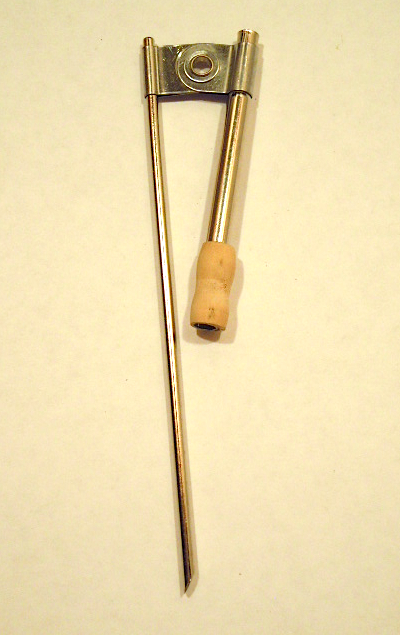
Not owning an airbrush, and not willing to make such an investment at this point, I bought this inexpensive mouth atomizer, which is an old-school device used to spray varnishes and other media onto paintings and drawings. Having never used such a thing before, I was glad to find some helpful instructions online.


For my three-dimensional objects, I chose three plastic elephants my mother got at a garage sale. I figured it would be better to use these than to potentially ruin something else. The elephant on the right is the same one I used for gyotaku.


For paints, I used bottled acrylics, watered down; and for paper, I used inexpensive 28 x 35.5 cm (11 x 14 inch) sketchbook paper. I found that paints the thickness of cream or buttermilk worked best for this particular technique.

The only difficult part of this is getting the hang of using the mouth atomizer, and even that isn't hard. Essentially, you bend it into an upside-down L-shape, dip the longer end in the paint and blow through the mouthpiece as you move the atomizer across the page. To see a mouth atomizer in action, click here.


I covered my working area with large sheets of bristol board, and laid a piece of paper down with one of the elephants in the middle. Then I simply sprayed across the page with the mouth atomizer, using purple, blue and green paint in succession.


This was a very easy activity, and resulted in about what I expected in terms of final art. With a three-dimensional object, you get softer edges than with a conventional stencil, which I liked. However, a three-dimensional object can also be dicey in terms of providing a full outline of the object. The more dimensional the object, the more diffuse the final image.


I enjoyed doing this, and it doesn't make as much of a mess as I thought it would. It's relatively easy to direct and control the paint, and I like the final look. It's not something I'd want to do every day, but it has a less uniform effect than a spray bottle or an actual airbrush, which was something I found rather appealing.


Elephant Lore of the Day
The most famous landmark in Chambéry, France is the fontaine des Éléphants (the Fountain of the Elephants). Built in 1838, it was erected to honour local hero Benoît de Boigne for his accomplishments in India.

Trained in Europe, de Boigne went to India in the early nineteenth century, where he helped the Maharaja of Gwalior build a massive army based on the European model. De Boigne also became the army's general, commanding a force of nearly 100,000 men. The army enabled the Maratha Empire to dominate central and northern India, and to resist the British for longer than any other princely state. So happy was the Maharaja with de Boigne's efforts that the Frenchman was made a jaghir, which came with enormous land holdings in India.

De Boigne later returned to Chambéry, and devoted the rest of his life to charity work. Upon his death in 1830, he left more than 3 million francs to the town of Chambéry, largely to support education, churches, and the poor.

When the fontaine des Éléphants was erected in the town square in 1838, it was derided by local residents, who nicknamed it les quatre sans culs ("the four without rear ends") because of the way its four elephants were embedded into the base of the column. Designed by French sculptor Victor Sappey, the is topped with a statue of de Boigne.


The fontaine des Éléphants in Chambéry, France.
Photo: François73
Source: http://en.wikipedia.org/wiki/File:Chamberyelephants.JPG


To Support Elephant Welfare
World Wildlife Fund
World Society for the Protection of Animals
Elephant sanctuaries (this Wikipedia list allows you to click through to information on a number of sanctuaries around the world)
Performing Animal Welfare Society
Zoocheck
Bring the Elephant Home
African Wildlife Foundation
Elephants Without Borders 
Save the Elephants   

Sunday, 29 January 2012

Elephant No. 119: Étrécissement


Since I kind of like cutting up paper, and wanted to do something relatively easy today, I thought I'd try étrécissement. 

Étrécissement is a Surrealist technique, invented in the 1950s by Belgian Surrealist Marcel Mariën. When he first started his artistic career, Mariën apparently couldn't draw, so instead he used media such as collage, decoupage and assemblages of found objects—ultimately leading him to create the étrécissement technique. Although I could find no root meaning for étrécissement, I'm guessing that the word itself is Surrealist, reworking the French "être" (to be) and "ciseaux" (scissors).


La Paix en guerre (Peace During Wartime), 1940
Marcel Mariën (1920–1993)
Collection of the Tate Britain, London
Source: http://www.tate.org.uk/servlet/
ViewWork?cgroupid=999999961&workid=86925&searchid=18121


It's easy to create an étrécissement: simply cut away parts of an existing image or images, either to reveal a new image or to "encourage" something new. It can be similar to collage or decoupage when a series of images are used; in its purest form, however, a single image is nibbled away to create something different.


L'Alotiste (The Woman from Alost), 1966
Marcel Mariën (1920–1993)
Collection of the Tate Britain, London
Source: http://www.tate.org.uk/servlet/
ViewWork?cgroupid=999999961&workid=86947&searchid=18121&tabview=image


Rather than simply cut elephant shapes willy-nilly out of existing photographs, which struck me as being too easy, I decided that I had to follow only existing lines within the images I chose. I also thought it might be interesting to use pictures of other wildlife, to see if I could find the elephant within.

I allowed myself to follow any line of shading I liked, as long as it actually existed on the page. This didn't always result in the effect I thought it would, but there was usually enough going on in each photograph that I could find at least a few lines that worked. 

I didn't use templates or drawings to guide me, but I don't think it would be cheating if you started that way. Another thing I found helpful in some cases was to begin by cutting along a line that clearly looked to me like part of an ear or a trunk, then snip off smaller bits of the rest of the photograph until the elephant began taking shape. Most of my étrécissements are not perfect, or even moderately elegant shapes, but I think they work well enough.

When I chose the photos, I chose pictures that I thought might be hiding an elephant, although I couldn't see an entire outline in any of them when I started. For those of you who want to play along, I've included the original photo, followed by my étrécissement.


Male lion in Africa.
Photo: Chris Johns
Source: http://animals.nationalgeographic.com/animals/mammals/african-lion/


Camel with kid.
Source: http://www.oxstyle.com/2010/12/camel.html


Zebra at the Frankfurt Zoo, Germany.
Photo: Frank Rumpenhorst/AP
Source: http://www.guardian.co.uk/environment/blog/2009/jan/15/
wildlife-animalbehaviour


Gorilla closeup.
Source: http://www.monkey-pictures.net/gorilla_pictures.html


Jammu and Kashmir police with assault rifles.
Source: http://impunitywatch.com/?p=12687


Tiger in a zoo.
Source: http://animals.howstuffworks.com/mammals/tiger-info.htm


Common house mouse.
Photo: Ilse Schmeller
Source: http://animals.yakohl.com/pop.php?pid=129


White rhinoceros.
Photo: photolibrary.com
Source: http://www.bbc.co.uk/nature/life/White_Rhinoceros


Panorama of people in India.
Source: http://www.lucmissinne.be/


This was a very easy exercise in many respects. Although the lines don't always exist where you want them, if you choose a photograph with lots going on, you can probably find something to work with. This actually reminded me a lot of my mapping experiment, but was slightly easier—which is why I did several. Even at that, it took me just under an hour to cut all of these.

I personally wouldn't do this as a hobby or my main art practice, but it was an interesting experience, and I can already see how more elaborate versions could be used in larger works.


Elephant Lore of the Day
Elephants actually don't like climbing hills, largely because of the energy it requires. In Kenya, scientists have discovered that elephants use only three-quarters of their 32,115-square-kilometre (12,400-square-mile) habitat, likely because the rest is too hilly. For a four-tonne (8,800-pound) elephant, it would take a whopping 25,000 extra calories a day for every vertical metre (3.3 feet) it climbed. That's 2500% more than it takes to walk on a level surface.

One elephant, however, decided that he might actually like the view from the top of Mount Kenya, 4,267 metres (14,000 feet) above sea level. Icy Mike scaled the frigid heights of the mountain—and stayed there. No one is sure why Mike climbed the mountain, but they do know why he decided to stay up there for the rest of his life. According to Dr. Iain Douglas-Hamilton of Save the Elephants, an elephant climbing down a hill needs even more energy for braking.


To Support Elephant Welfare
World Wildlife Fund
World Society for the Protection of Animals
Elephant sanctuaries (this Wikipedia list allows you to click through to information on a number of sanctuaries around the world)
Performing Animal Welfare Society
Zoocheck
Bring the Elephant Home
African Wildlife Foundation